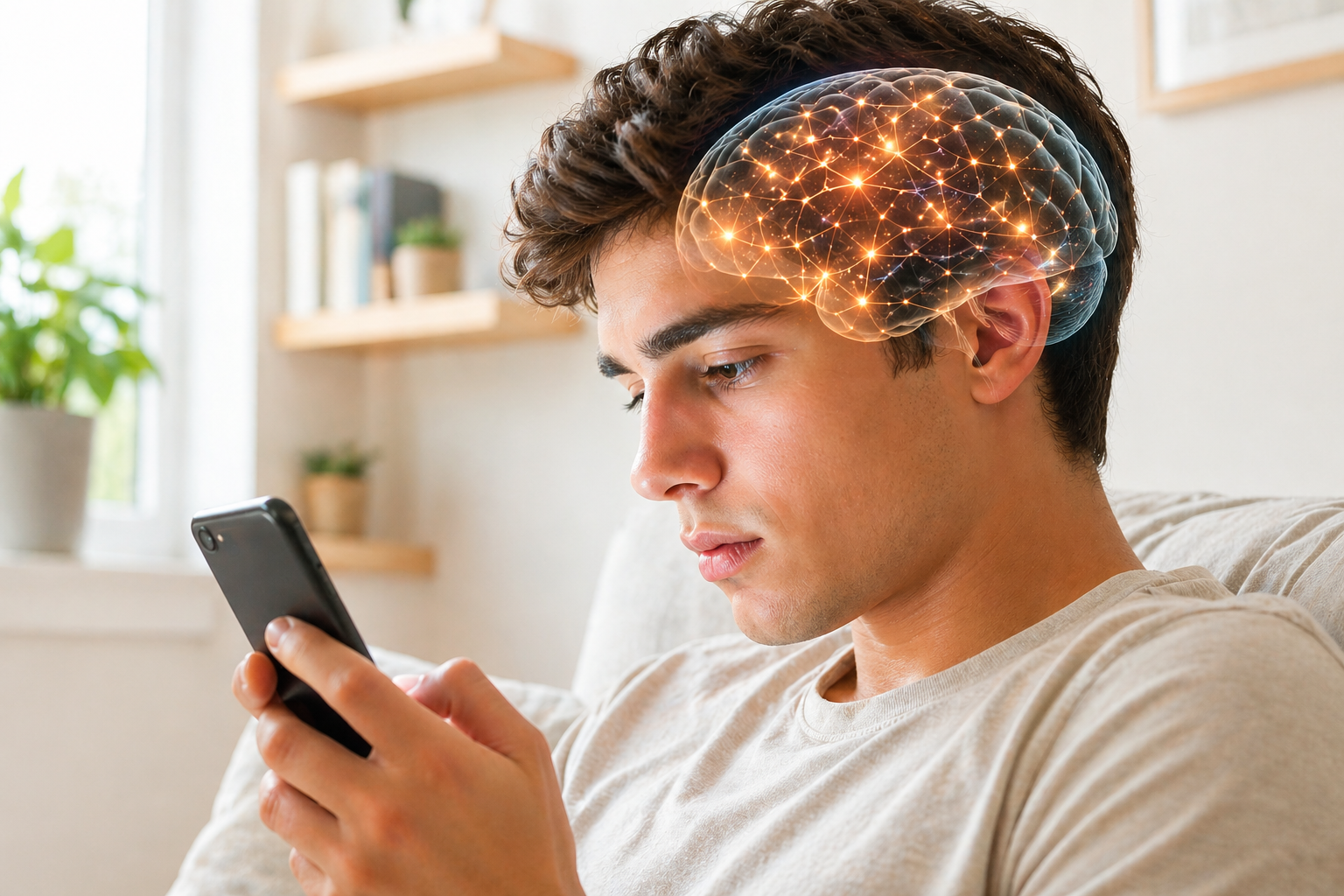
Understand how screen time rewires your brain and impacts mental health. Learn simple habits to reduce stress and improve focus today.
If your day starts and ends with a screen, your brain rarely gets a break.
Do you feel more anxious after scrolling? Struggle to focus without checking your phone?
You’re not alone.
In India, constant screen use has become normal, but it quietly shapes mood, sleep, and attention.
In this guide, you’ll learn how screen time affects your brain and simple ways to reset your mental balance.
What Is Screen Time Stress?
Screen time stress is the mental strain caused by excessive use of digital devices.
It builds slowly. Most people don’t notice until they feel tired, distracted, or overwhelmed.
Your brain is not designed for constant input.
Notifications, videos, and endless scrolling keep it in a state of alert.
Over time, this leads to mental fatigue.
Common signs include:
-
Feeling restless without your phone
-
Difficulty focusing on tasks
-
Irritability after long screen use
-
Trouble sleeping
In India, students preparing for exams and professionals working long hours often face this daily.
Online classes, work calls, and social media combine into one long digital cycle.
The problem is not just time.
It’s the lack of mental recovery.
Why Scrolling Changes How Your Brain Works
Here's the honest truth: your brain is genuinely not built for the pace of modern screens.
Every time you scroll and see something interesting, your brain releases a small hit of dopamine — the chemical linked to reward and pleasure. It feels good, briefly. So you keep scrolling, looking for the next hit.
Over time, your brain starts expecting that fast, constant stimulation. Slower activities — reading, a quiet conversation, just sitting with your thoughts — start to feel boring or even uncomfortable. Deep focus becomes harder to access. Silence starts to feel strange.
This isn't a personal failing. It's just how brains adapt to repeated behaviour. And the tricky part is that it happens so gradually, you don't notice until you're already in the thick of it.
The Sleep Problem
There's another layer to this that often goes unnoticed: screens mess with your sleep, and poor sleep makes everything worse.
The blue light emitted by phones and laptops suppresses melatonin — the hormone that signals to your body that it's time to wind down. Late-night scrolling doesn't just keep you mentally stimulated; it literally delays your body's ability to fall asleep.
The result? You take longer to drift off, your sleep quality drops, and you wake up already running on empty. Then you reach for your phone to get through the morning. And the cycle continues.
Simple Techniques You Can Try Today
You don’t need to quit screens completely.
Small changes can reset your brain.
Digital Sunset Rule
Stop screen use 60 minutes before sleep.
Replace it with:
-
Reading
-
Light stretching
-
Writing thoughts
This improves sleep quality within days.
App Limit Method
Set daily limits on apps.
Start small:
-
Reduce 30 minutes per day
-
Remove non-essential notifications
This creates awareness of usage patterns.
Offline Replacement Habit
Don’t just remove screens. Replace them.
Try:
-
Walking
-
Talking to someone
-
Listening to music without visuals
Your brain needs slower activities to recover.
When Should You Seek Extra Support?
Sometimes, screen time stress becomes harder to manage alone.
Consider support if:
-
Sleep problems last for weeks
-
Anxiety increases after screen use
-
You feel unable to reduce usage
Talking to a mental health professional can help.
You don’t need a diagnosis to ask for help.
Early support makes change easier.
Frequently Asked Questions
Is screen time stress real?
Yes.Excessive screen use affects brain function, sleep, and emotional balance.
It builds gradually but has clear mental effects.
How much screen time is too much?
It depends on usage quality.
More than 2–3 hours of non-essential screen time daily may increase stress and fatigue.
Can reducing screen time improve mood?
Yes.Even small reductions improve sleep, focus, and emotional stability within a few days.
Why do I feel anxious after scrolling?
Constant comparison, information overload, and fast content increase mental stimulation.This leads to anxiety and restlessness.
What is the fastest way to reset my brain?
Take short breaks.
Use breathing exercises and reduce night-time screen exposure.
Consistency matters more than intensity.
Start Your Understanding Journey with MindYatra
Scrolling can quietly turn into stress.
Sometimes we don’t even realize how endless reels, constant content, and nonstop input are affecting our minds.
If you often feel distracted, restless, or mentally tired after scrolling, it may be time to understand why your mind keeps seeking more.
With MindYatra, you can start building awareness of your emotional habits and digital patterns.
Gain clarity on your emotions.
Understand your daily mental responses.
Discover emotional patterns that affect your focus and mood.
Use free self-awareness tools for helpful insights
The first step to calm is understanding yourself.
Start your journey with MindYatra today.
Disclaimer
This article is for general awareness purposes and is not a substitute for professional medical or psychological advice. If you're feeling overwhelmed, please reach out to a qualified mental health professional.